EN
 RU
 ES
 FR
 AR
 IND

Three-Way Ball Valves: One Valve Instead of Two, and L-Port vs. T-Port
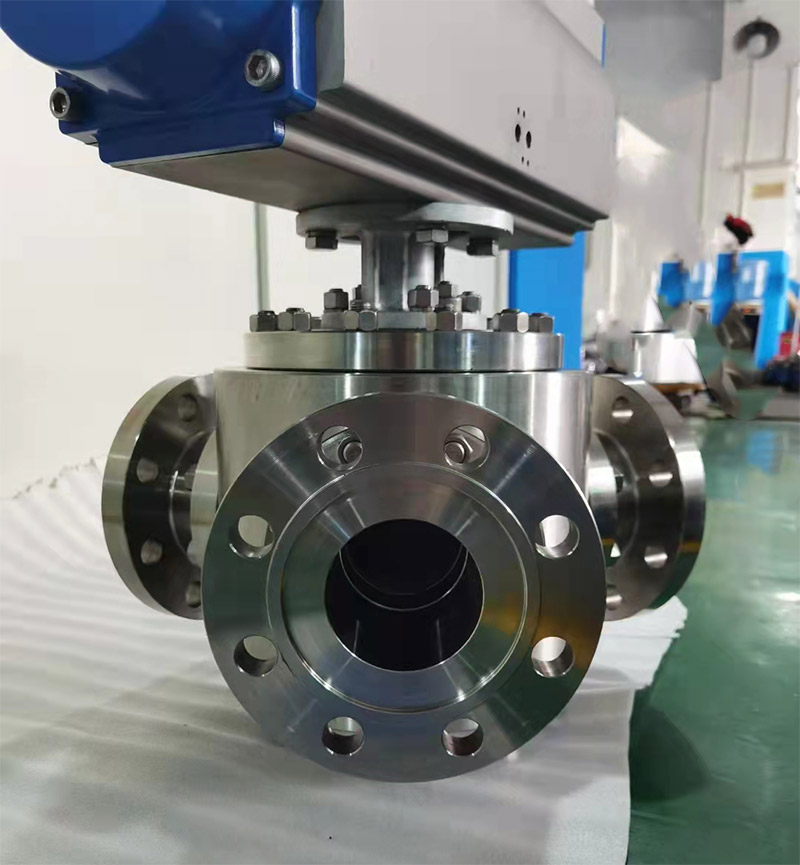
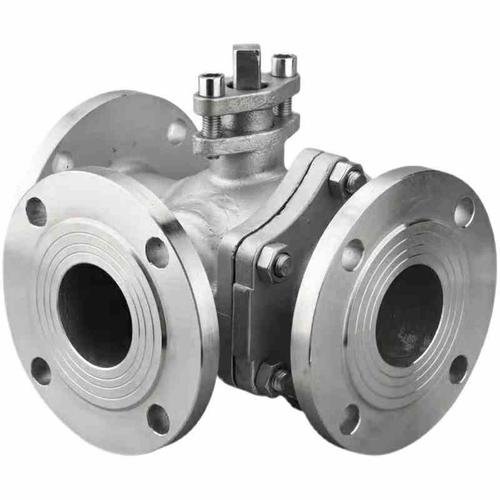
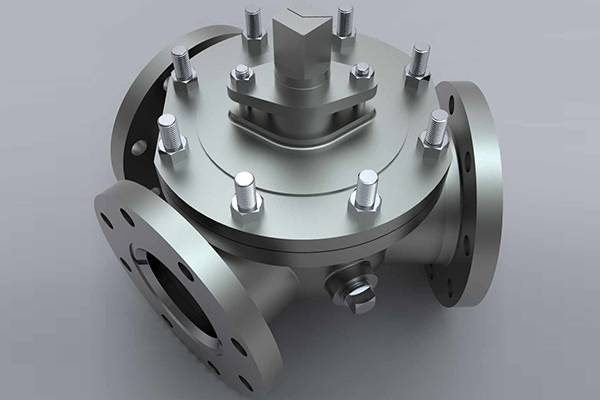
A three-way ball valve combines three ports and a single ball in one body, replacing the traditional arrangement of two isolation valves and a pipe tee. The consolidation cuts the number of piping connections, potential leak points, pipe supports and actuators on the line.
What the valve can do comes down to the shape of the bore through the ball.
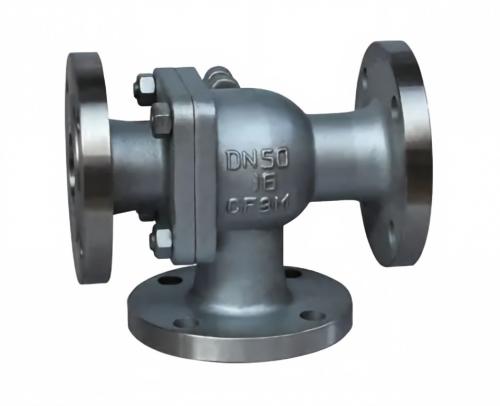
- L-Port: Connects any two adjacent ports while shutting off the third. Ideal for stream diverting, tank switching, and filter changeovers. Typically features a 2-seat configuration.
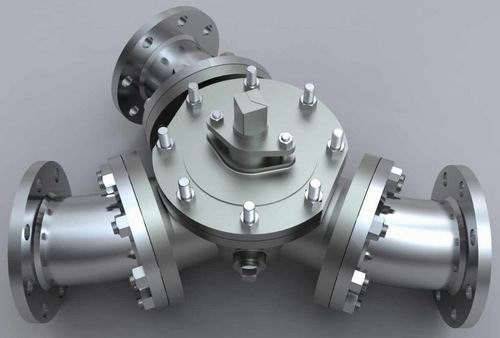
- T-Port: Connects all three ports simultaneously, enabling stream splitting, combining, blending, or straight-through flow. Typically utilizes a 4-seat design to ensure proper sealing across multiple flow paths. (Exact seat arrangements vary by manufacturer; always verify against technical drawings.)
Spring-loaded seats can enhance sealing performance and assist with cavity-pressure relief, though actual effectiveness depends on system pressure, temperature, media, and seat geometry.
How to Select One
Four decisions settle it, and only the first is about the ball.
Start with the function the line has to perform. If the job is diverting, sending one stream to one of two destinations, take the L-port. It connects two ports and shuts the third, which is everything a diverting duty needs, and it gives you a clean shut-off on the idle branch. If the job includes blending or distributing, take the T-port. It can link all three ports at once, which is what you need when two supplies have to combine into one, or when one supply divides into two branches that must run at the same time. Mixing and dividing are the two things an L-port ball physically cannot do.
The medium and the temperature decide the seat. Soft PTFE seats cover most water, oil, steam and chemical duties up to around 150°C, and they deliver the tightest shut-off available. Above that, the seat has to be metal, and it can be overlaid with a nickel alloy or a hard carbide facing when the medium is abrasive as well as hot. If the fluid is aggressive enough to attack stainless steel, that is a conversation about a lined or special-alloy body rather than about the valve type.
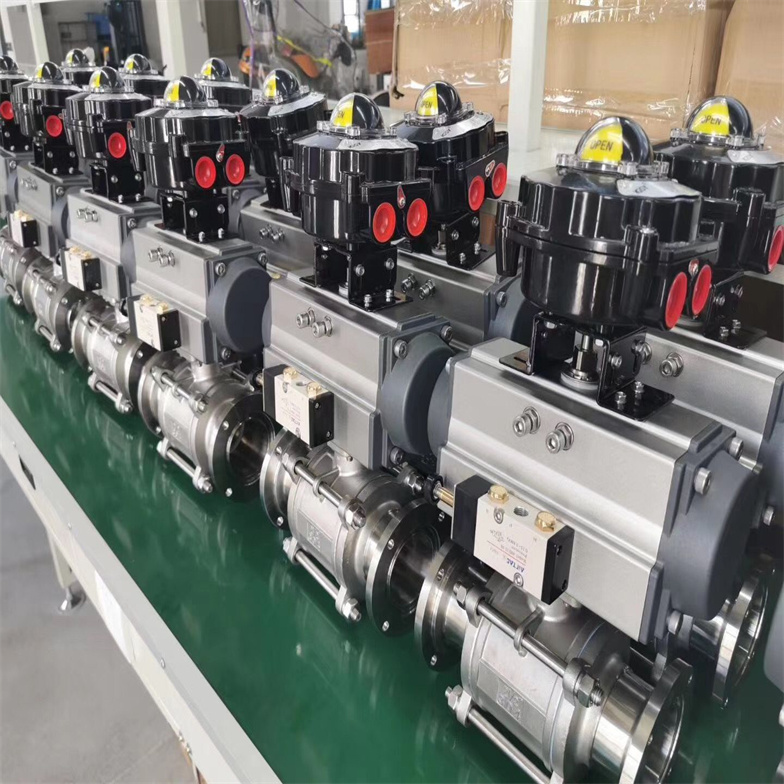
The duty decides the actuator. Manual is enough for a valve that gets turned once a day. Worm gear comes in when the operating torque is more than one person should be handling at that size. Pneumatic is the natural answer for frequent switching, for remote operation and for fail-safe behaviour, since a spring-return actuator can drive the valve to a safe position when the air supply fails. Electric is the answer where there is no compressed air on site, or where the valve has to report its position back to the control system.
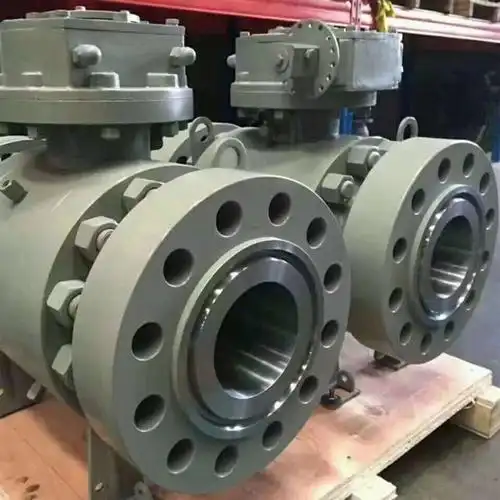
Then confirm the details against the drawings rather than the catalogue. Seat arrangements, port designations and flow direction vary between manufacturers, and the markings cast into the body are the only thing that will settle which port is which on your drawing.
Mining and Metallurgy
Ore slurry is abrasive and may also be acidic, depending on the deposit. A three-way ball valve often handles this duty better than a gate valve because the ball opens and closes with a wiping rotation across the seat rather than lifting a wedge and dragging it back down. There is no gate to score and no wedge to warp. A full-bore passage also reduces the high-velocity particle impingement and localized erosion typical of restricted valve openings.
Where slurry must be sent to two different destinations, one three-way valve can do the job in a single body instead of a manifold made from two valves and a tee. Either branch can be taken offline for inspection without shutting down the entire circuit.
For corrosive ore bodies, the body and trim should be selected for the actual slurry chemistry rather than specified as standard carbon steel. Stainless or alloy construction, a hardened or overlay seat, and a stem designed to resist blowout will usually outlast a standard valve. The difference normally shows up in the maintenance schedule rather than in the initial quotation.
Chemical and Petrochemical Transfer
Chemical service varies widely. A line carrying sulfuric acid is not doing the same job as one carrying caustic soda, and neither is doing the same job as a solvent line. A three-way ball valve is useful because the same body can be configured for switching, dividing, or blending, and because the seat material can be selected for the duty without changing the surrounding pipework.
Seat material is usually the limiting factor. PTFE handles a wide range of media and, in this construction, temperatures up to around 150°C; the actual limit depends on pressure, medium, and cycling duty. Above that range, a metal seat is normally required, and it can be overlaid with a nickel alloy or carbide facing when the medium is both hot and abrasive. In tank farms, the typical duty is switching between storage vessels, which is where the L-port arrangement fits best: two ports open, one closed, one quarter-turn to change over.
Pulp and Paper
Paper pulp is viscous, carries fibers and fillers, and can set in a valve cavity if it stops moving. The geometry of a three-way ball valve suits this duty better than most alternatives. The ball passage is a smooth full bore with no pocket where solids can settle, and the opening and closing action is a wiping rotation rather than a sliding movement, so there is less opportunity for fiber to build up.
A three-way ball valve also allows stock to be routed between pulpers and the wash line without adding a second valve and manifold into a space that may not have room for them.
For demanding fibrous applications, a hemispherical ball is worth specifying. A semi-spherical core leaves no enclosed dead volume between the seat and the body cavity, which is where pulp tends to collect and harden. It costs more, but it removes a common cause of blockage.
Water Treatment, Filtration, and Municipal Supply
Water treatment and filtration are among the most common applications for three-way ball valves, and the reason is the changeover. A filtration skid with two parallel filters needs a way to send flow to the clean filter and take the dirty one offline for cleaning. Two isolation valves and a manifold can do this, but a manifold adds gaskets, welds, and potential leak points. An L-port three-way valve handles the switching directly, so a filter can be changed without dropping the line. A pneumatic actuator can make the changeover automatic.
The same valve logic applies to duty and standby pumps on a booster set, sample lines that return to the main instead of going to drain, cooling water feeding two different headers, and changeover between heating and cooling circuits in a district heating network. The district heating changeover normally requires a T-port ball because it must blend two supplies rather than simply choose between them.
Food, Pharmaceutical, and Sanitary Service
In these industries, cleanability is often more important than pressure rating. A stainless body, polished ball, and PTFE seats leave little surface for product to cling to. A three-way valve can route cleaning fluid or product between a tank and a filling line without disconnecting pipework, which is useful in CIP applications.
For sanitary service, however, a standard three-way ball valve may not be sufficient. Where cleanability is critical, specify a sanitary or dead-volume-free design rather than relying on the general wiping action of a standard valve.
Where a Three-Way Ball Valve Is the Wrong Choice
A three-way ball valve is not a universal replacement for every two-way valve, and the pitch is easy to overstate.
Continuous flow modulation needs a control valve. A ball valve left part-open for long periods wears its seat, and no three-way ball valve should be asked to hold a flow somewhere between closed and open.
Highly aggressive media such as hydrofluoric acid need a purpose-built lined valve rather than a standard metal body, whatever the port arrangement.
And where two branches have to be able to open and close completely independently, with both open at the same time, that is two separate two-way valves. A T-port ball can mix and divide, but it cannot hold three branches apart at once, and there is no three-way substitute for that.
At ZZJG we would rather quote you a two-way valve than a three-way one if that is what the duty actually needs.
Installation Details That Affect Performance
A three-way ball valve is easy to specify and surprisingly easy to install incorrectly. Flow direction is fixed by the way the ball is bored, so an L-port valve installed backward will switch in the opposite sense to what the operator expects. Port markings are cast into the body and should be checked against the drawing before the pipe is welded.
The handle position should also be marked. An L-port valve has two meaningful positions, while a T-port valve may have three or four. A new shift on a night call has no way of knowing which position is which without a label on the pipe. A small plate reading "handle pointing this way, flow to Tank A" costs very little and prevents many operating errors.
How ZZJG Manufactures and Tests Three-Way Ball Valves
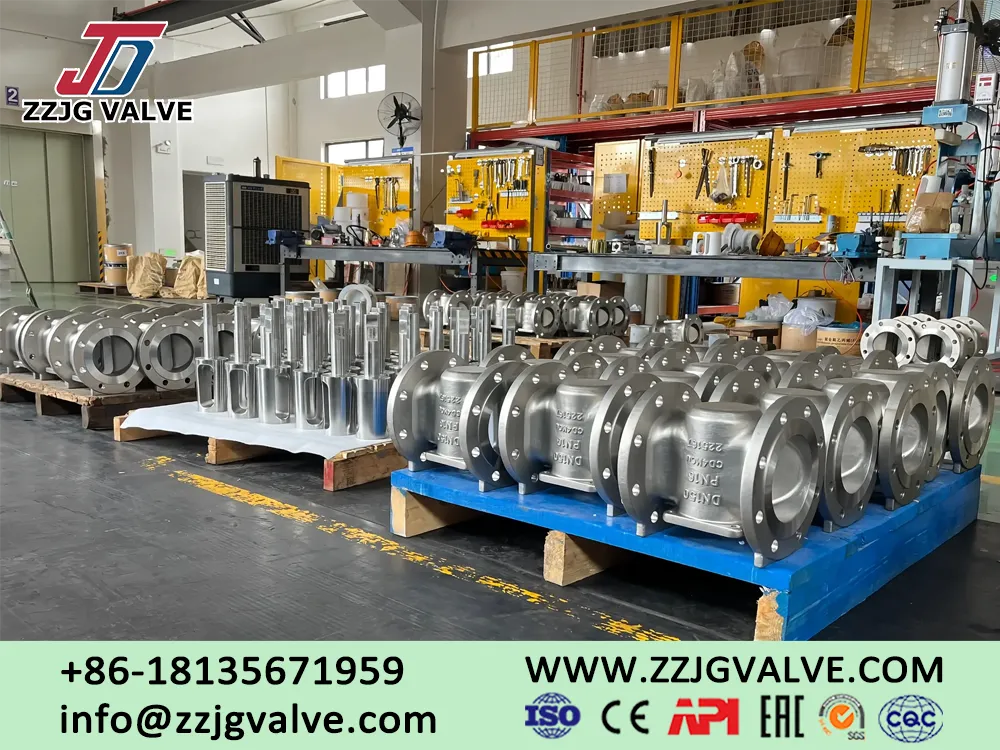
ZZJG has manufactured valves since 1981, with three manufacturing plants, a national R&D center, and a valve laboratory that reproduces full working conditions for testing. The three-way ball valve range covers L-port and T-port arrangements in carbon steel and stainless steel, flanged and threaded connections, and manual, worm gear, pneumatic, and electric operation. Seat materials range from soft PTFE to metal overlays for abrasive and high-temperature service.
Shell and seat tests are performed in accordance with API 598 and GB/T 13927 as applicable.
Got an application where two isolation valves and a tee are taking up too much space? Send our engineering team your fluid medium, pressure, temperature, and cycling frequency. If a three-way ball valve is the right fit, we'll give you the exact specification. If it's not, we'll tell you straight.
Next: Key Points for Using Concentric Soft-Seated Butterfly Valves in Municipal Water Supply and Drainage Networks