EN
EN RU
RU ES
ES FR
FR AR
AR IND
IND
Butterfly Valve Structure, Performance and Selection
In the vast pipeline networks of water supply and drainage, HVAC, and even petrochemical industries, the "switch" controlling fluid flow and its on/off state is crucial. Among these, the butterfly valve, with its simple and efficient design, has become one of the most widely used valve types. It acts like a precise metronome, easily directing the flow of media through a simple rotation. Today, we'll delve into this key role in piping systems.
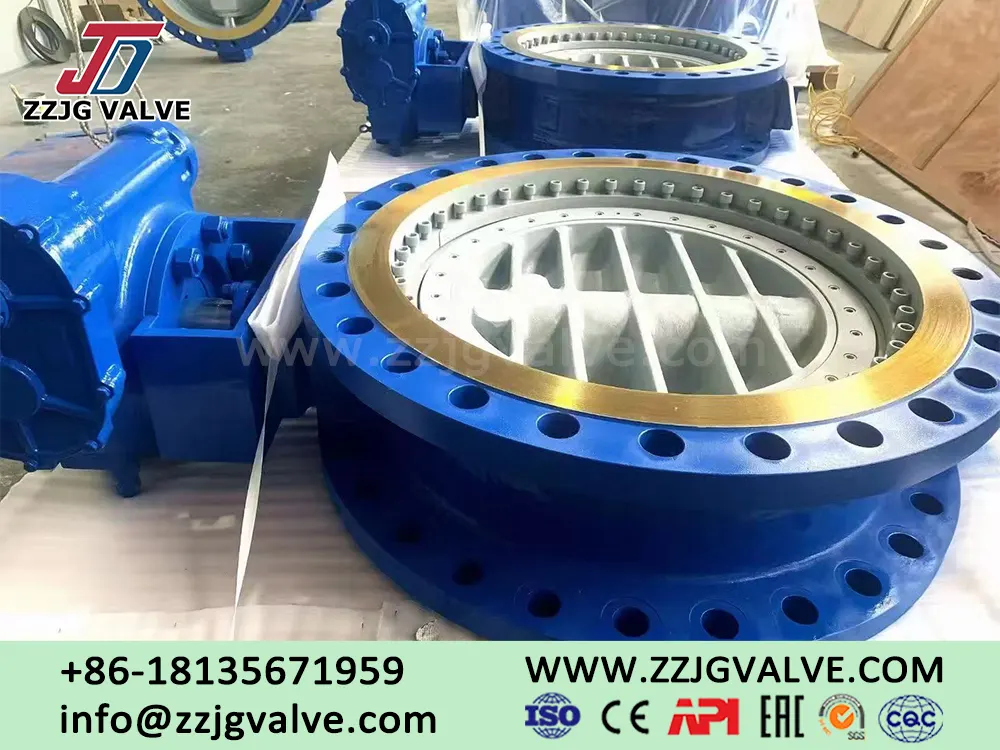
I. The Ingenious Core: The Art of Flow Control Through Four Components
The charm of the поворотный клапан lies first and foremost in its simple and efficient structure. It is mainly composed of four core components that work together to fulfill its control mission:
1. Valve Body: This is the outer shell and flow channel of the valve, usually cast into a cylindrical shape, with both ends tightly connected to the pipeline via flanges, clamps, or welding. Its material varies from cast iron and cast steel to stainless steel, selected based on the corrosiveness of the media, temperature, and pressure.
2. Valve Plate: A circular disc located inside the valve body, it is the core of flow control. It is fixed to the valve stem and can rotate. When the valve plate plane is parallel to the flow channel, the channel is fully open; when rotated 90 degrees to be perpendicular to the flow channel, the medium is completely cut off.
3. Valve Stem: The "drive shaft" that runs through the valve body and connects the valve plate to the external operating mechanism. Whether manually operated or receiving commands from an electric or pneumatic actuator, power is transmitted to the valve plate through this valve stem, driving its rotation.
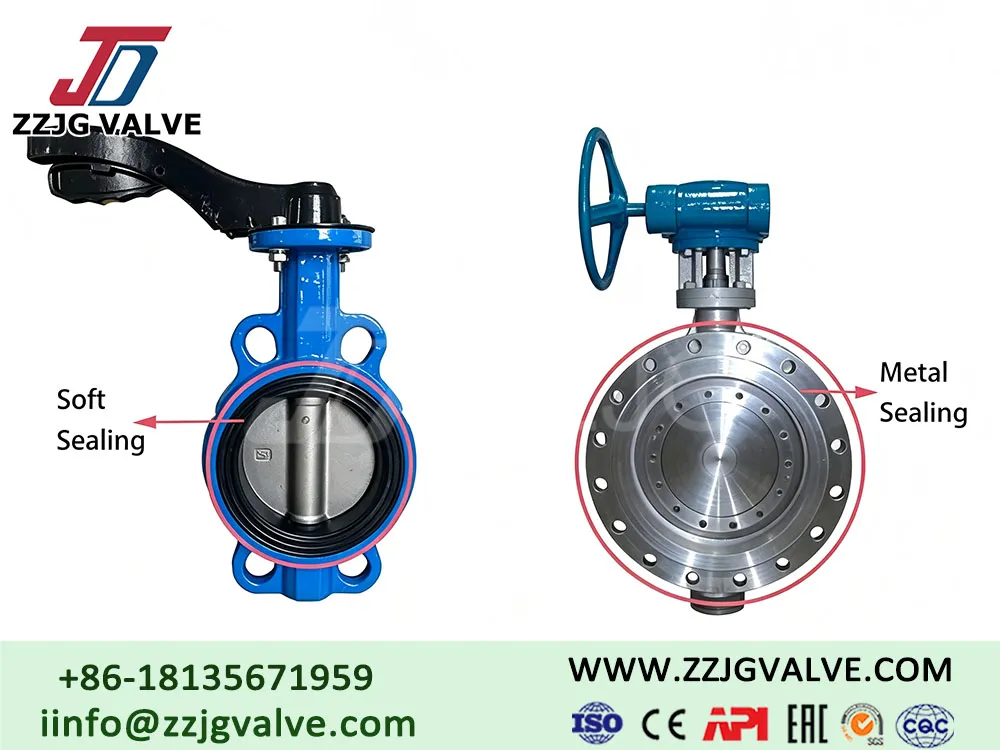
4. Sealing Device: This is crucial for ensuring tight valve shut-off, typically located at the contact surface between the valve body and the valve plate. Depending on the operating conditions, the sealing material may be elastic materials such as rubber or polytetrafluoroethylene (PTFE) (soft seal), or metal materials such as stainless steel or hard alloy (hard seal). Its performance directly determines the valve's leakage level.
II. Working Principle: Controlling Flow with a Turn
The working principle of a butterfly valve is intuitive and ingenious: rotational adjustment . The operator rotates the valve stem via a handle or actuator, causing the valve plate to rotate 0° to 90° around its own axis within the valve body. As the valve plate angle changes, the area of the flow channel that is blocked also changes, thus achieving continuous regulation of the medium's flow rate and pressure. When fully open, the flow resistance is extremely low, and when fully closed, it provides a tight shut-off.
Compared to gate valves, which require multiple rotations to open and close, or ball valves, which require significant installation space, butterfly valves, especially large-diameter butterfly valves, have clear advantages: operation is completed with only a quarter turn, their structure is compact, and they open and close quickly and effortlessly. This makes them highly favored in large-diameter municipal water supply and drainage, power plant circulating water, and other systems.
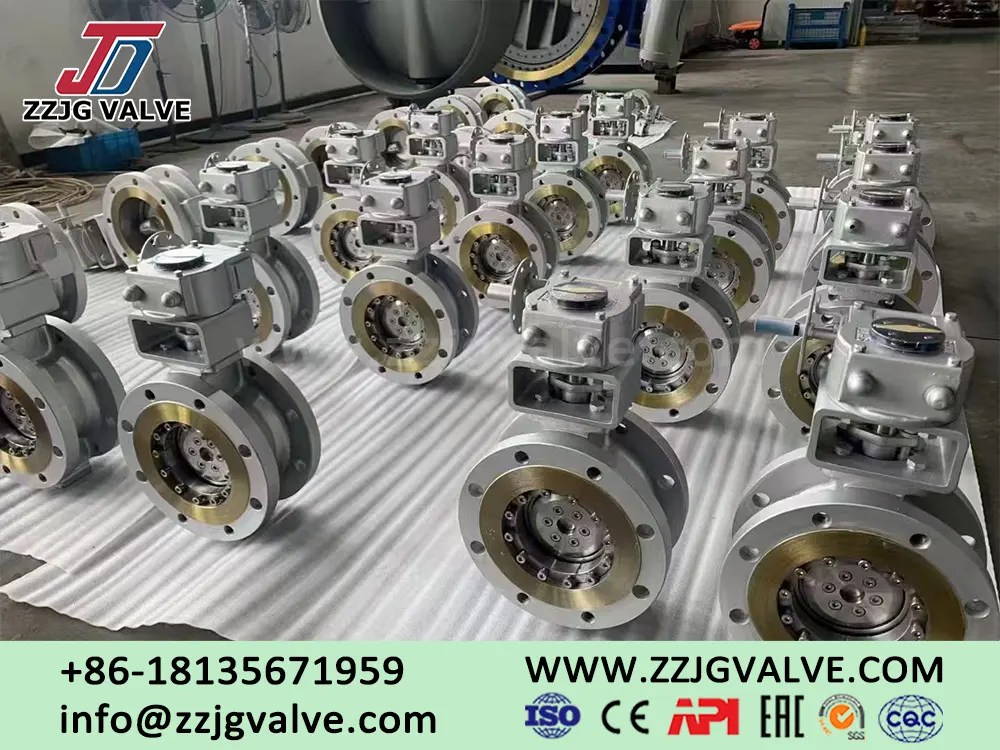
III. Key Performance: How to Choose the Right One for Your Operating Conditions?
Selecting a suitable butterfly valve cannot be based solely on its diameter. The following core performance indicators must be considered to ensure its suitability for the actual working environment:
Flow Capacity: Butterfly valves have low flow resistance and strong flow capacity when fully open, making them suitable for high-flow-rate applications. Engineers often refer to their flow coefficient (Cv/Kv value) for precise selection; the higher the value, the stronger the flow capacity.
Sealing Performance:This is the lifeline of the valve. Soft-seal butterfly valves(such as those with rubber seals) typically achieve "zero leakage," but their temperature and pressure resistance is limited, and they are mostly used for clean media such as water and air at normal temperature and pressure. Hard-seal butterfly valves (metal seals) can withstand high temperatures and pressures (even exceeding 450°C) and corrosive media, but the allowable leakage is relatively higher, making them suitable for harsh operating conditions.
Pressure and Temperature Range: The valve body material and sealing material together determine the valve's pressure and temperature limits. For example, a butterfly valve with a cast iron body and EPDM rubber seal is typically used in water systems below PN16 and 120°C; while a butterfly valve with a stainless steel body and metal seal can handle higher pressure levels and high-temperature media of several hundred degrees Celsius.
Regulation Characteristics: For applications requiring precise flow control (such as process or air conditioning water systems), it is important to consider whether the butterfly valve's flow regulation curve is linear. A well-designed butterfly valve maintains a good proportional relationship between its opening degree and flow rate changes, achieving precise control.
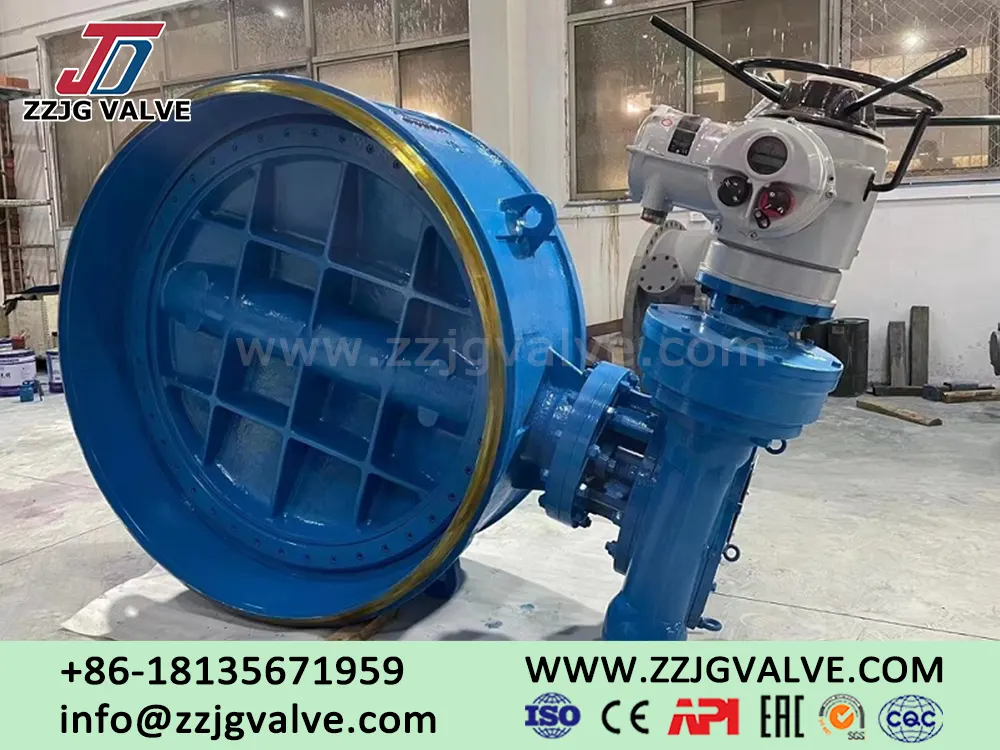
IV. Common Classifications: Finding the Right Model
Understanding the classification of butterfly valves helps us quickly identify the target model. There are several main classification methods:
1. Based on Sealing Surface Material: As mentioned above, they are mainly divided into two categories: soft seal and hard seal. This is the primary factor to consider when selecting a model, directly corresponding to the "mild" or "harsh" nature of the medium.
2. Based on Connection Method:
Waist-and-Clip Type: The valve body is thin and secured by flanges on both ends of the pipeline.
Преимущества: Compact structure, light weight, low cost, and easy installation; very commonly used.
Flanged Type: The valve body has its own flange, which is bolted to the pipeline flange.
Преимущества: Stable connection, reliable sealing, easy disassembly and maintenance, suitable for larger diameters and higher pressure applications.
Welded Type: The valve body is directly welded to the pipeline.
Преимущества: Absolutely reliable sealing, suitable for high-pressure, high-temperature, or extremely hazardous media, but cannot be disassembled after installation.
3. Classification by Drive Method:
Manual: Operated via handle, handwheel, or worm gearbox. Economical and simple, suitable for applications requiring infrequent adjustments or automation.
Electric: Driven by a motor, enabling remote, automatic, or program control. The preferred choice for modern factories and building automation systems.
Pneumatic/Hydraulic: Powered by compressed air or hydraulic oil. Rapid action and good explosion-proof performance. Commonly used in petroleum, chemical, and other areas with explosion-proof requirements.
4. Classification by Structural Design (Key Evolution):
Centerline Type: The valve stem axis passes through the center of the valve plate and the center of the valve body. The simplest structure, but the sealing surface relies on contact friction, resulting in a relatively shorter lifespan. Mostly used in low-pressure soft-seal valves.
Single/Double Eccentric: The valve stem axis is offset, allowing the valve plate and sealing surface to quickly separate or contact during opening and closing, reducing friction and improving seal life.
Triple Eccentric: Based on the double eccentric design, the sealing surface is made conical. This design achieves zero friction between the valve plate and the sealing ring during opening and closing, while relying on torque to achieve a tight seal. This is currently the mainstream design for high-performance hard-seal butterfly valves, with sealing performance comparable to ball valves and extremely strong pressure and temperature resistance.
V. Summary
In conclusion, the butterfly valve is an industrial masterpiece that maximizes the application of simple principles. The core of its selection lies in precisely matching the operating conditions —understanding the temperature, pressure, and corrosiveness of the medium, the pipe diameter and connection method, and the control requirements (manual/automatic, shut-off/regulation) allows you to find the most suitable option among soft and hard seals, various connections, drive methods, and structural designs. Understanding it and applying it appropriately allows us to effortlessly control the rhythm of every flow in complex fluid systems.
Далее: Butterfly Valve in the Chemical Industry
-1.webp)
.jpg)